
Water damage never announces itself politely. It is a burst pipe at 2 AM, a water heater that lets go in the garage, or a winter storm that finds the one weak spot in your roof. When it happens, the next 48 hours decide whether you are facing a manageable repair or a months-long battle with mold and structural damage. This guide to water damage restoration California homeowners can actually use covers what to do first, how the professional process works, what insurance expects from you, and the mistakes that turn small losses into big ones. After years restoring homes across Southern California, we have seen every version of this emergency, and the difference between good and bad outcomes almost always comes down to speed and knowledge.
Why Water Damage Is a Race Against the Clock
Water does not wait. Here is the realistic timeline restoration professionals work against:
- Within minutes: Water spreads to every low point, soaking into drywall, flooring, and furniture
- Within hours: Drywall swells, wood begins absorbing moisture, and finishes start to stain
- Within 24 to 48 hours: Mold growth can begin on wet materials, especially in warm conditions
- Within a week: Structural wood warps, mold colonies establish, and restoration costs multiply
This is why emergency restoration services operate 24/7. Every hour of standing water expands the damage zone, and in California’s milder climate, mold does not take winters off.
The Three Categories of Water Damage
Not all water is equal, and the category determines how cleanup must be handled.
| Category | Common Name | Source Examples | Risk Level |
|---|---|---|---|
| Category 1 | Clean water | Supply lines, water heaters, rain intrusion | Low initial risk |
| Category 2 | Gray water | Washing machine discharge, dishwasher overflow | Moderate contamination |
| Category 3 | Black water | Sewage backups, flooding from outside | Serious health hazard |
Category matters enormously. Clean water that sits becomes gray water. Gray water becomes black. And Category 3 events, like sewage backups, require professional sewage cleanup services with proper protective equipment, containment, and disposal. This is never DIY territory.
What to Do in the First Hour
If you are standing in water right now, here is your checklist:
- Stop the source. Shut off the main water valve if the source is internal. Every California homeowner should know where this valve is before an emergency.
- Kill power to affected areas if water is near outlets or appliances, but only if you can reach your panel safely.
- Document everything. Photos and video of standing water, damaged items, and affected rooms before any cleanup. Your insurance claim depends on this.
- Call your restoration company first, then your insurance carrier. Professionals can begin mitigation immediately, which insurers actually require.
- Move what you can. Lift furniture onto blocks, pull rugs, and relocate valuables and electronics.
- Do not wait to “see if it dries.” It won’t, at least not the parts you cannot see.
How Professional Water Damage Restoration Works
Understanding the process helps you evaluate any restoration contractor in California and know what should happen at each stage.
Step 1: Emergency Response and Assessment
A professional team arrives, identifies the water category, and maps the moisture using meters and thermal imaging. Water travels in hidden ways, inside walls, under flooring, across ceilings, and what you can see is rarely the full picture.
Step 2: Water Extraction
Industrial pumps and extractors remove standing water fast. This step dramatically shortens drying time and is where professional equipment outclasses anything available at a rental counter.
Step 3: Structural Drying and Dehumidification
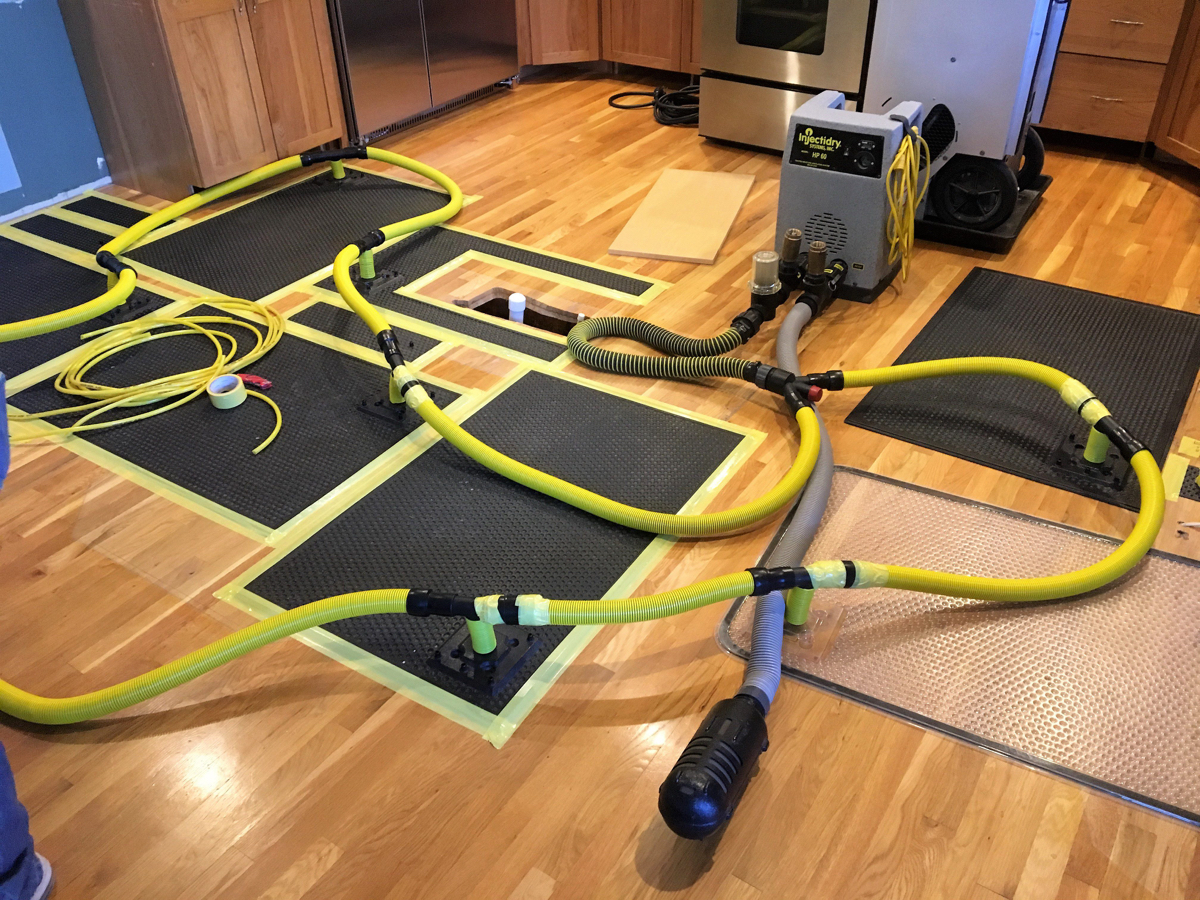
This is the heart of proper water damage repair. Commercial air movers and dehumidifiers run for several days, with daily moisture readings documenting progress until materials return to dry standards. Skipping or shortening this step is the number one cause of mold problems later.
Step 4: Cleaning and Sanitization
Affected areas are cleaned, treated with antimicrobials, and deodorized. Category 2 and 3 events require more aggressive protocols, including removal of contaminated porous materials.
Step 5: Restoration and Reconstruction
Finally, the rebuild: drywall, flooring, paint, trim, and finishes. A full-service property restoration company handles reconstruction in-house, which means one accountable team from the first extraction to the final coat of paint rather than juggling separate contractors.
H3: Why Mold Remediation Often Follows Water Damage Restoration in California
When drying is delayed or done poorly, mold follows. Professional mold remediation in California involves containment, HEPA air filtration, removal of affected materials, and verification testing. The best mold strategy, though, is preventing it entirely with fast, thorough drying. If you smell mustiness weeks after a water event, do not paint over it. Get it inspected.
Working With Your Insurance Company
For most homeowners, this is the most confusing part. Some honest guidance:
- Sudden and accidental damage is typically covered. Burst pipes, appliance failures, and water heater ruptures usually qualify under standard policies.
- Gradual damage and neglect are typically not. A slow leak you ignored for months is a harder claim.
- Flood damage requires separate flood insurance. Standard homeowner policies exclude rising water from outside, a critical detail for properties in flood-prone parts of Riverside and San Bernardino Counties.
- Mitigation is your responsibility. Policies require you to take reasonable steps to prevent further damage, which is why calling a restoration company immediately protects both your home and your claim.
- Documentation wins claims. Photos, videos, receipts, and the restoration company’s moisture logs all support your case.
An experienced restoration contractor works with insurance carriers daily, documents to their standards, and can bill carriers directly, removing an enormous burden during a stressful time.
Expert Tips From the Field
A few things professionals wish every Southern California homeowner knew:
- Know your shutoff valve location today, not during the emergency
- Replace washing machine hoses every five years. Burst supply hoses are among the most common claims we see
- Inspect your water heater annually. Most fail between years 8 and 12, often dramatically
- Check under sinks monthly. Small supply line drips cause shocking damage over time
- After earthquakes, check for leaks. Even minor seismic activity stresses plumbing connections across Los Angeles and Orange County
- During storm season, watch ceilings and window corners. California’s atmospheric river events find every roof weakness
Common Mistakes That Make Water Damage Worse
- Waiting to see if it dries on its own. Surface-dry is not structure-dry, and hidden moisture breeds mold.
- Using a shop vac and a box fan for a major loss. Consumer equipment cannot dry inside wall cavities or under flooring.
- Delaying the insurance call. Late reporting complicates claims.
- Throwing away damaged items before documenting them. Photograph first, discard second.
- Hiring the cheapest unlicensed crew. Improper drying, missed moisture, and failed mold containment cost far more to fix later. Verify licensing and restoration credentials.
- Ignoring small stains. That faint ceiling ring is water finding its way through your home. Find the source now.
Frequently Asked Questions
How much does water damage restoration cost in California? Costs vary widely based on the water category, square footage affected, and how long water sat before mitigation began. Minor clean-water events cost far less than Category 3 losses with reconstruction. Most restoration companies provide assessments quickly, and insurance often covers sudden, accidental damage, leaving you responsible mainly for your deductible.
Does homeowners insurance cover water damage restoration? Usually yes, for sudden and accidental events like burst pipes or appliance failures. Gradual leaks, deferred maintenance, and exterior flooding are typically excluded, with flood damage requiring separate flood insurance. Document everything immediately and report the claim promptly to protect your coverage.
How long does water damage restoration take? Drying typically takes 3 to 5 days, verified with daily moisture readings. Full restoration, including reconstruction of drywall, flooring, and finishes, can take anywhere from a few days to several weeks depending on the scope of damage. Fast professional response significantly shortens the overall timeline.
Can I clean up water damage myself? Small clean-water spills caught immediately can be DIY jobs. But anything involving more than surface water, wall cavities, flooring, ceilings, or any gray or black water requires professional equipment and expertise. Hidden moisture is the danger: what looks dry often is not, and mold follows weeks later.
How can I prevent water damage in my home? Replace washing machine hoses every five years, service your water heater annually, check under-sink connections monthly, keep gutters and drainage clear before storm season, and know your main shutoff valve location. Smart leak detectors that shut off water automatically are an increasingly affordable safeguard for Southern California homes.
Conclusion
Water damage is one of the most stressful events a property owner can face, but it is also one of the most recoverable when handled correctly. Act fast, document thoroughly, insist on complete structural drying, and work with licensed professionals who handle everything from extraction through reconstruction. For water damage restoration California property owners can trust, the right local partner turns a disaster back into a home, often better than it was before.
Contact AquaPhoenix Builders
When water strikes, every hour counts. AquaPhoenix Builders provides complete water damage restoration, fire damage restoration, mold remediation, sewage cleanup, and full reconstruction services throughout Orange County, Los Angeles County, Riverside County, and San Bernardino County. From emergency response to insurance coordination to the final rebuild, one experienced team handles it all. Contact AquaPhoenix Builders now for immediate help or a free assessment, and let us bring your property back.